 |
 Home | Webstore Home | Webstore
|
|
Latest News:
OOTP 26 Available
- FHM 12 Available
- OOTP Go! Available
Out of the Park Baseball 26 Buy Now! |

|
|
||||
| ||||
 06-11-2023, 10:41 PM
|
#101 |
|
Major Leagues
Join Date: Apr 2019
Posts: 325
|
October 1912: Shoeless Joe and Dutch
Joe Jackson (.379, 14 HR, 115 RBI) and Ty Cobb (.368, 119 RBI) both had monster seasons for New York but it was not eough. They could never really find anyone for the #3 or #4 spot in their rotation and wound up 13th in ERA. Dutch Leonard won 30 games as a rookie for a surprising Cambridge Schooners team that won 90 games. But it will be Boston and Chicago in the Series as the Midways found a way to get it done without Cobb and will make their 4th straight World Series appearance. For Boston, it is their first time back in the Series since 1905.
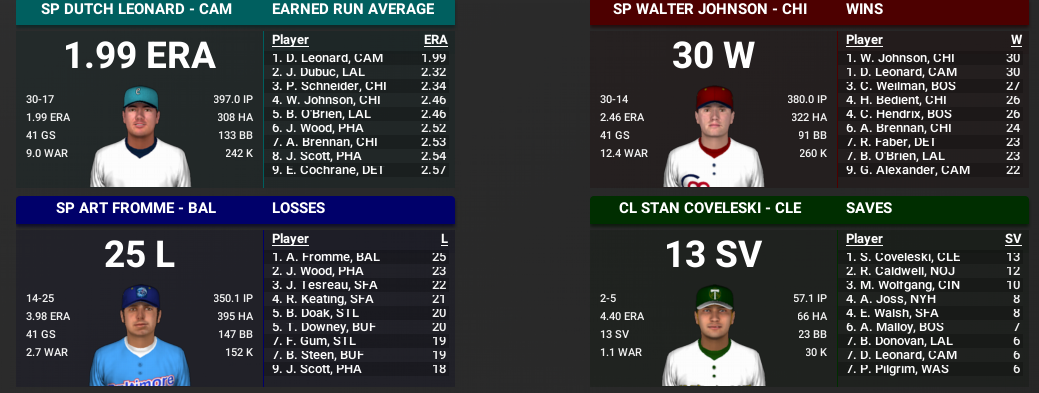 More on Dutch: "Prior to the 1919 season Leonard was included in the trade which also sent Ernie Shore and Duffy Lewis to the New York Yankees. Unlike Shore and Lewis, however, Leonard never appeared in a Yankee uniform and became a salary holdout. According to one report, Leonard demanded that his entire 1919 salary be deposited into a savings account, a request which infuriated New York owner Jacob Ruppert. “No man who doesn’t trust my word can pitch for my team,” Ruppert declared. In late May, the rights to the still-unsigned Leonard were sold to the Detroit Tigers for $12,000." |

|

|
|
06-12-2023, 11:02 PM
|
#102 |
|
Major Leagues
Join Date: Apr 2019
Posts: 325
|
October 1912: Chicago Repeats
The Chicago Midways accomplish something special after losing Ty Cobb to free agency. Despite the loss, Chicago wins their league by 7 games over LA and then beats Boston 4 games to 2 to take their 3rd championship in 4 years. Clyde Milan hit .423 to win the Series MVP but Walter Johnson won 2 games after winning 30 in the regular season. He seems likely to win his 4th Ace Award in a couple of days.
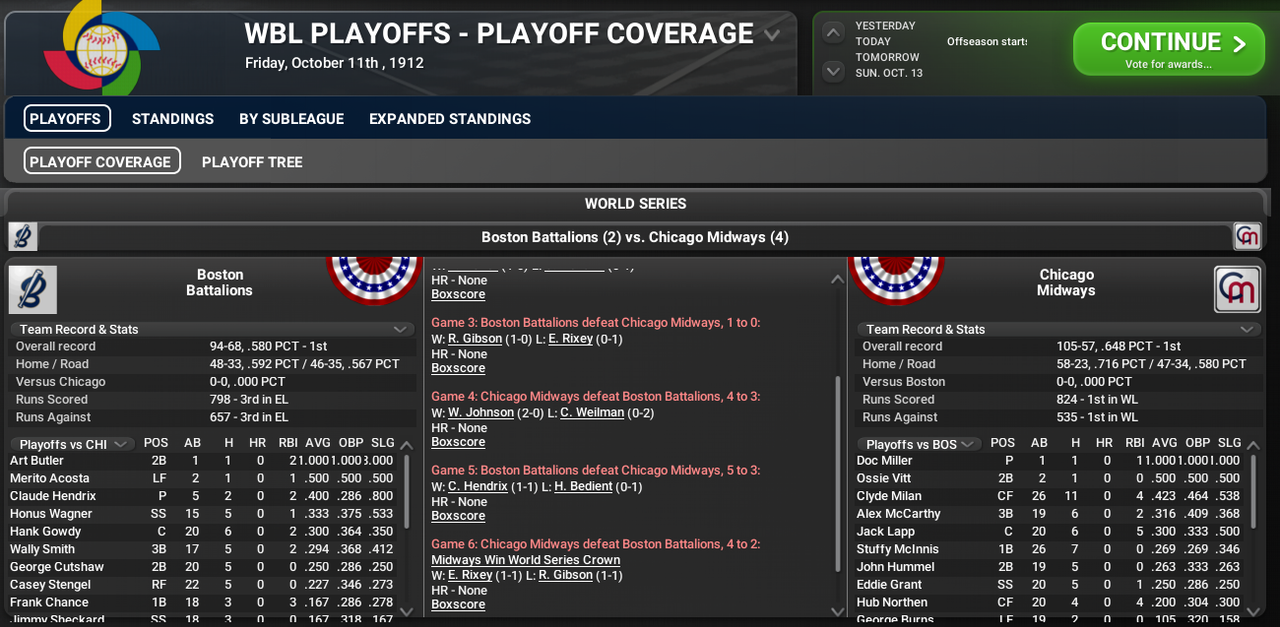 More on "Deerfoot": "Milan’s peak was from 1911 to 1913 when he played in every game but one, batted over .300 each season, and averaged almost 74 stolen bases per season. In 1912 he finished fourth in the Chalmers Award voting, and his American League record-breaking total of 88 steals would have been 91 if Washington’s game against St. Louis on August 9th hadn’t been rained out in the third inning." |
|
|
|
|
06-12-2023, 11:31 PM
|
#103 |
|
Major Leagues
Join Date: Apr 2019
Posts: 325
|
April 1913: New York Makes Big Splash
As it happens so often in the offseason, the Highrisers have signed the biggest free agent. This time it is is Chief Bender to join Ty Cobb, Shoeless Joe and the rest. Despite so many big free agent signings through the years, only in 1906 was New York able to win the Eastern League.
Defending EL champ Boston also managed to get Smoky Joe Wood by trading Earl Yingling and a minor infielder. They should be tough to beat. 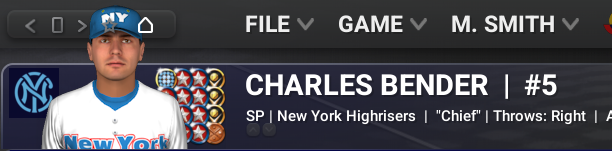
|
|
|
|
|
06-13-2023, 11:05 PM
|
#104 |
|
Major Leagues
Join Date: Apr 2019
Posts: 325
|
June 1913: The Mighty Moonshots
The Cincinnati Moonshots have been the surprise of the league thus far, jumping out to an 8 game lead in the Western League. They have 5 of the 8 top batting averages in the West including Tillie Shafter, Frank Baker, Dode Paskert, Wally Schang and Jimmy Walsh.
On the hill, Rube Benton is 13-2 with a league-leading 1.46 ERA.  Sounds like Rube was a little wild. From SABR: "Rube got off to another strong start in 1913, having won 11 of 18 decisions when the motorcycle he was riding early one morning struck a trolley car at high speed. Unconscious when he was taken to the hospital, Benton suffered a broken jaw and numerous cuts and bruises. The Reds suspended him for the remainder of the season. Already, Rube was exhibiting the type of erratic behavior that would plague him for the rest of his life. His contract for 1914 included a clause stipulating that he would receive a bonus if he abstained from alcohol and tobacco to an extent that would satisfy manager Buck Herzog. For that one brief season Benton managed to avoid controversy, winning 16 games (including four shutouts) for a last-place club that won a total of only 60." |
|
|
|
|
06-13-2023, 11:25 PM
|
#105 |
|
Major Leagues
Join Date: Apr 2019
Posts: 325
|
Meet the Franchise: Cambridge Schooners
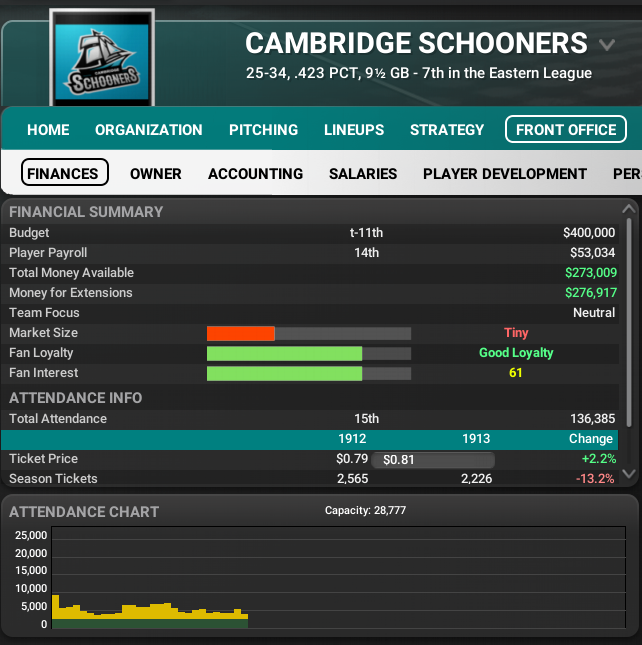
The Cambridge Schooners have largely struggled so far in their WBL history. They began as the Providence Silver Stars and finished second in the league's inaugural season but the team quickly picked up stakes and moved about 40 miles north to Cambridge.As Boston's "second team" the Schooners play in a tiny market and have had small payrolls. After many seasons finishing somewhere between 5th and 8th, they finished 2nd last year but are back in 7th in 1913. They play in small Schooner Stadium with the rollercoaster in back of right field and wear teal uniforms.
 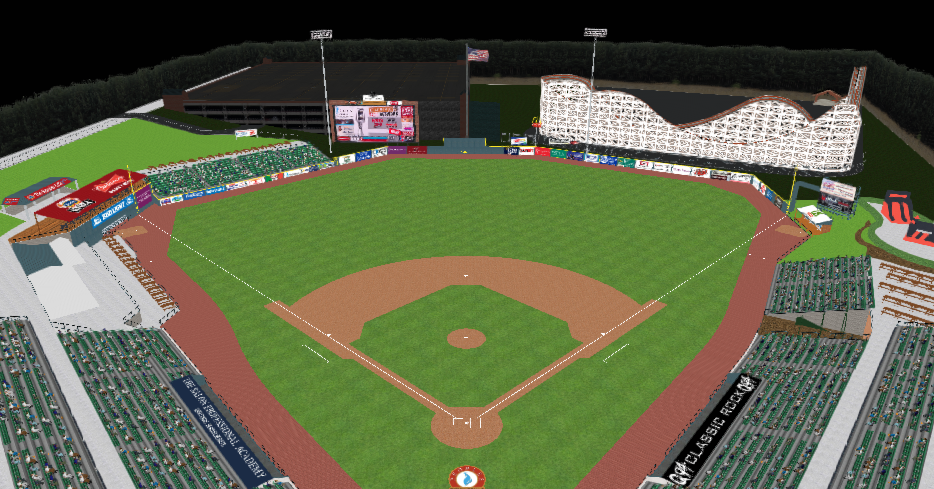  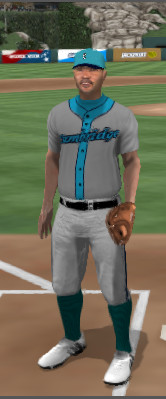
|
|
|
|
|
06-13-2023, 11:35 PM
|
#106 |
|
Major Leagues
Join Date: Apr 2019
Posts: 325
|
July 1913: The Bambino Goes 2nd
The St. Louis Clydesdales certainly had an opportunity with their #1 pick to take Babe Ruth. Instead they opt for Erv Lange, a 25 year-old pitcher who never made the majors. San Francisco picks Ruth although he already has a commit school and may or may not sign.
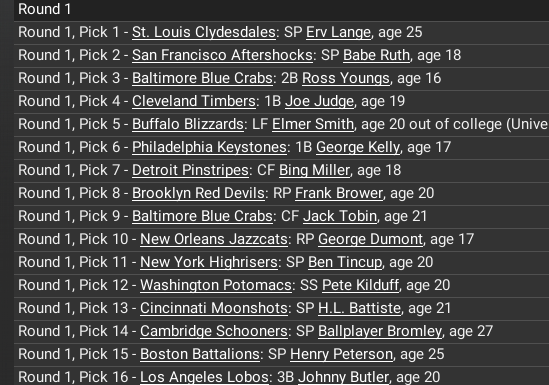
|
|
|
|
|
06-13-2023, 11:49 PM
|
#107 |
|
Major Leagues
Join Date: Apr 2019
Posts: 325
|
August 1913: The Babe Signs with SF
Babe Ruth has indeed signed and will be a member of the San Francisco Aftershocks. In fact, he has already started one game (which he lost). The Babe joins a pretty sorry outfit. Fred Merkle is the team's #3 hitter and SF currently has the second to worst record in baseball. The team has never won the pennant.
Meanwhile, Philadelphia is trying to make a cinderella run to their own first pennant. Despite a much worse run differential than second place Boston, the Keystones are still a game up and holding onto the lead they have had most of the year. 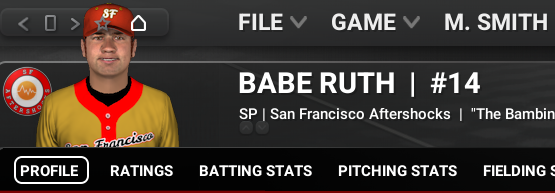 SABR's bio of Ruth's early childhood follows. Not sure why the game has him born in Murphy, Texas. "George Herman Ruth was born to George Ruth and Catherine Schamberger on February 6, 1895, in his mother’s parents’ house at 216 Emory Street, in Baltimore, Maryland. With his father working long hours in his saloon and his mother often in poor health, Little George (as he was known) spent his days unsupervised on the waterfront streets and docks, committing petty theft and vandalism. Hanging out in his father’s bar, he stole money from the till, drained the last drops from old beer glasses, and developed a taste for chewing tobacco. He was only six years old." |
|
|
|
|
06-14-2023, 11:00 PM
|
#108 |
|
Major Leagues
Join Date: Apr 2019
Posts: 325
|
September 1913: Cincy Vs. Who?
The Cinicinnati Moonshots have had an incredible year. Second place Los Angeles has won 10 in a row and the Moonshots are still 15 games up. In the Eastern League, there is quite a race between last year's winner, Boston, and the Philadelphia Keystones. Philly is looking for their first pennant.
 It's been another awesome year for Joe Jackson. With 117 RBI and a month to go it looks like Shoeless Joe will have his 4th MVP and second while on the same team as Cobb. |
|
|
|
|
06-14-2023, 11:48 PM
|
#109 |
|
Major Leagues
Join Date: Apr 2019
Posts: 325
|
October 1913: Cinderella Keystones
The Philadelphia Keystones have won their first pennant, edging out Boston in a see-saw race that went down to the wire. Philly prevailed by two games as Boston somehow lost in the second to last game of the season to hapless Baltimore with ace Smoky Joe Wood on the mound.
The aging Philly team has a number of veteran stars 30 or older including Nap Lajoie, Fred Clarke, Joe Tinker and Roger Breshnahan. Lajoie led Cleveland to a World Series with an MVP season back in 1901 and the 8-time All-Star is still batting second and hitting .295 this year. It will be an uphill climb against a superior Cincinnati team in the World Series, however. 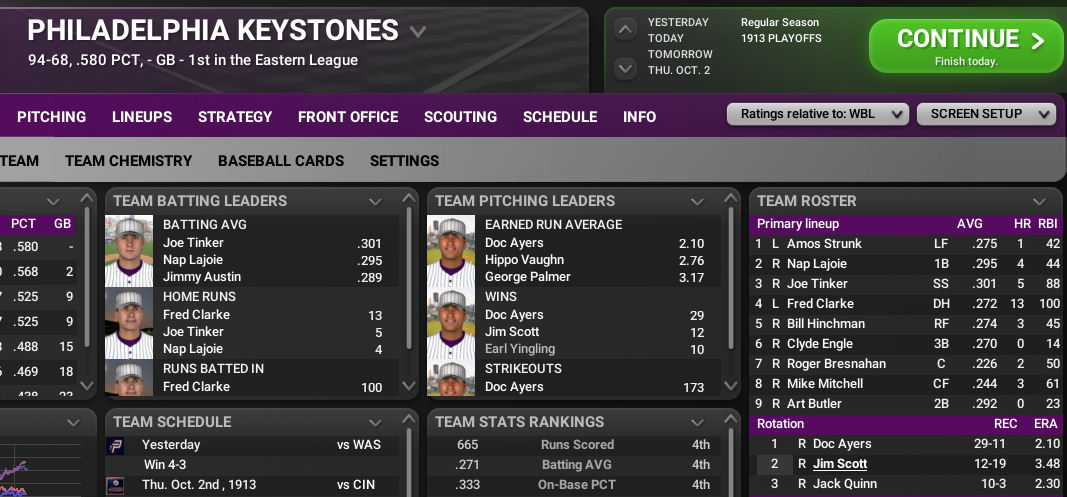 Much better than Lajoie's final years in the MLB: "In 1914 Lajoie struggled to a .258 batting average, as bad eyesight gradually diminished his effectiveness. Following the 1914 season, Lajoie’s contract was purchased by the Philadelphia Athletics, and Nap was reunited with his old friend and manager, Connie Mack. Unfortunately, Nap arrived one year too late to get his first shot at winning a pennant. In 1915 and 1916, Lajoie played out the string as Eddie Collins‘s replacement at second base, posting batting averages of .280 and .246, respectively, while the A’s plummeted into the American League cellar. Following Philadelphia’s dismal 36-117 performance in 1916, Lajoie announced his retirement from the majors." |
|
|
|
|
06-14-2023, 11:52 PM
|
#110 |
|
Major Leagues
Join Date: Apr 2019
Posts: 325
|
October 1913: Cincinnati Wins World Series
In a very entertaining World Series, the Moonshots took care of business in 6 games over Philadelphia. Game Six went 12 innings after Philly tied it up in the bottom of the 9th. It is the first title for Cincinnati who had not been in the World Series since 1902.
The MVP was Jack Fournier who hit .478. 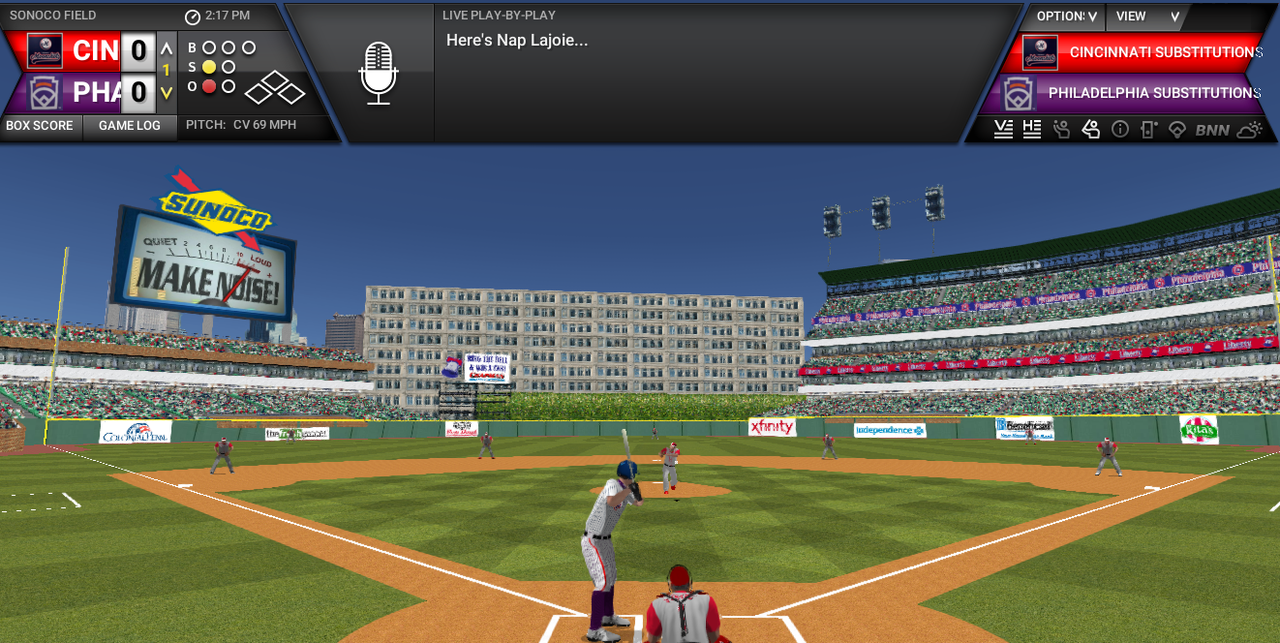 Fournier was apparently all hit, no field: "Yet he remained abysmal in the field. Anchored at first base, Jack had very little range moving from the bag. Typically he would catch the ball only when it was thrown right at him, yet even then he often struggled. In 1914, playing only 97 games at first base after Chase departed, Fournier committed an astounding 25 errors, with two more as an outfielder. While the next season he showed some improvement as a first baseman, with “only” 10 errors in 65 games, his performance in the outfield grew worse, as he committed seven more errors there, in only 57 games. It’s hard to know how many of his miscues may have contributed to Chicago defeats, but clearly the White Sox were growing frustrated with his inept glovework." |
|
|
|
|
06-15-2023, 11:07 PM
|
#111 |
|
Major Leagues
Join Date: Apr 2019
Posts: 325
|
May 1914: Baker Back to Back MVPs
Frank "Home Run" Baker continues to have huge seasons for the defending champion Cincinnati Moonshots. Cincy is in the lead again in the Western League and Baker is hitting .347. He was named MVP for 1913 as he was in 1912.
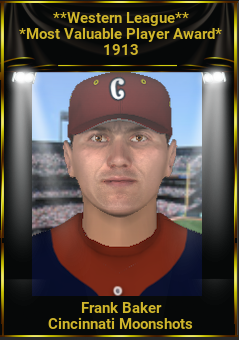 Baker was involved in a famous play with Ty Cobb: "Baker’s outstanding rookie campaign was a major factor in the Athletics’ surge in the standings. Winning 27 more games than they had in 1908, the Mackmen finished in second place, just 3½ games behind the Detroit Tigers. In late August, the upstart A’s had actually enjoyed a 1½ game lead in the standings, before dropping three straight at Detroit’s Bennett Park. It was in the first game of this pivotal series that Baker was involved in one of the most controversial plays of the era, when Detroit superstar Ty Cobb spiked him in the forearm as Baker was attempting to tag Cobb out at third base. Frank had the wound wrapped and was able to stay in the game, but the play infuriated Mack, who went so far as to call Cobb the dirtiest player in baseball history. But a few days later, a photograph of the play taken by William Kuenzel of the Detroit News showed Baker reaching across the bag to tag Cobb, who was sliding away from the third baseman. The photograph vindicated Cobb, and led the Detroit Free Press to declare that Baker was a “soft-fleshed darling” for complaining about the play." |
|
|
|
|
06-15-2023, 11:21 PM
|
#112 |
|
Major Leagues
Join Date: Apr 2019
Posts: 325
|
June 1914: Flying Dutchman Still Going Strong
Honus Wagner and the Boston Battallions are in first place again and the 40 year-old DH is coming up on 3000 hits. He needs just 47 more to join that exclusive club. However, Wagner is still looking for his first World Series ring, could he get it at age 40?
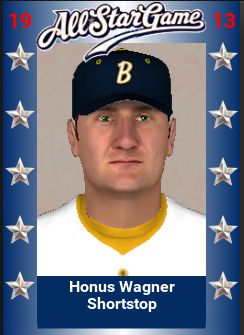 A bit from SABR abaout Wagner post-playing days: "The Wagners were hit fairly hard by the Depression. William Benswanger, taking over the Pirates’ leadership after the death of his father-in-law, Barney Dreyfuss, heard of Wagner’s situation in 1933 and gave him a coaching job. Honus’s first task was to make a big-league shortstop out of the hard-hitting Arky Vaughan, who went on to a Hall of Fame career. He primarily coached and encouraged the rookies, becoming a substitute father to them, and chatted with the fans. He spun yarns, like the time he scooped up a grounder in his steam-shovel hands along with grass, pebbles, and a rabbit that had run onto the field and heaved the whole mess to first, nailing a fast runner – by a “hare.” Once shy, he became a fine after-dinner speaker and barroom raconteur. Age and injuries catching up with him, he retired in 1951." |
|
|
|
|
06-16-2023, 10:11 PM
|
#113 |
|
Major Leagues
Join Date: Apr 2019
Posts: 325
|
July 1914: Tough Times in New Orleans
The New Orleans Jazzcats are back in last place again. Despite two #1 overall picks, things have not improved in the Bayou. One of those picks, Bob Shawkey, is currently 5-13 with a 3.34 ERA and the other, Reb Russell, is hurt for 5 weeks.
The Jazzcats managed one 2nd place finish in 1906 (although they were 17 games behind St. L). They were last or second to last every season between 1907 and 1911 but were not able to improve through the draft. 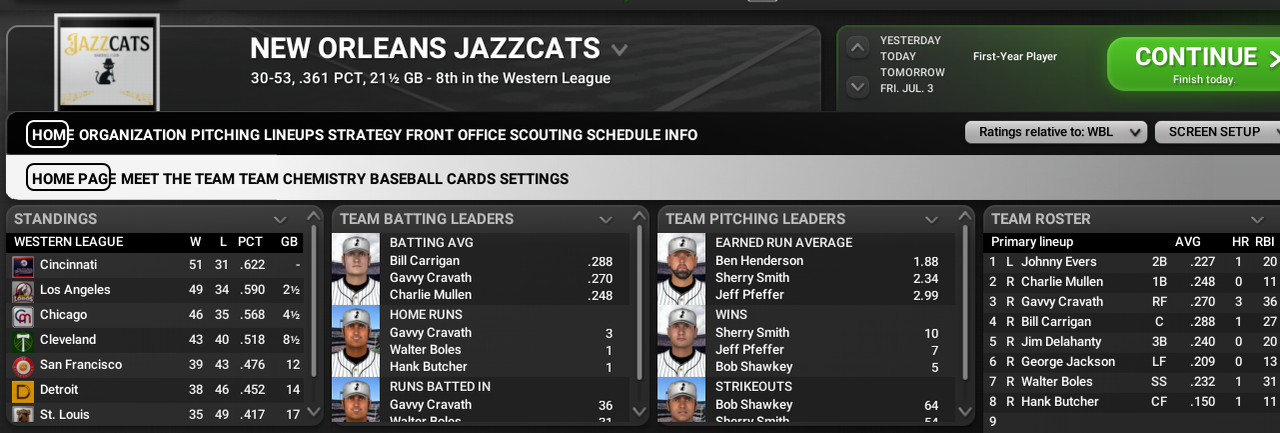
|
|
|
|
|
06-16-2023, 10:40 PM
|
#114 |
|
Major Leagues
Join Date: Apr 2019
Posts: 325
|
August 1914: Rajah to join the Babe
San Francisco got lucky last year as St. Louis took an also-ran and let Babe Ruth drop to #2. This year the Aftershocks had the top pick and SF did not miss, picking Rogers Hornsby in the #1 overall slot. That said, another mediocre season in New York has proved that having two ultrasuperstars does not necessarily mean a pennant. The Highrisers are 55-53 even with Shoeless Joe and Ty Cobb mashing the ball.
Meanwhile, the LA Lobos are looking for their first pennant, just a game and a half behind Cincy. The Lobos have finished 2nd the last two years but have never been to the World Series. 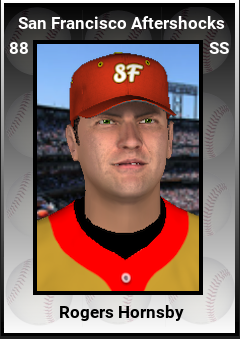 Probably just me but I never really noticed that every great hitter in the conversation for best ever is left-handed.Rogers is the top righty according to SABR: "Any conversation about the greatest hitter in baseball history must include Rogers Hornsby in the opening gambit.1 His .358 lifetime batting average in 23 big-league seasons is second all-time to Ty Cobb’s .367 and well ahead of such all-time greats as Tris Speaker (.345), Ted Williams (.344), Babe Ruth (.342), Lou Gehrig (.340), and Stan Musial (.331). Further, there is really no debate that Hornsby is the greatest right-handed hitter of all time; he is significantly ahead of such notables as Harry Heilmann (.342) and Al Simmons (.334). " |
|
|
|
|
06-16-2023, 11:03 PM
|
#115 |
|
Major Leagues
Join Date: Apr 2019
Posts: 325
|
WBL History: Cy Wins 388
It will be interesting to rewrite some of the most famous leaderboards. One I am interested in is the all-time wins leader. In the MLB it was Cy Young 511, Johnson 417, Matthewson and Pete Alexander at 373.
But in the WBL, Cy Young, who just made the Hall of Fame, wound up with 388. Walter Johnson already has 200 at age 26 so he is in pretty good shape. Pete Alexander has not had an amazing start. He is 76-62 at age 27, although his Cambridge team is improving. Christy Matthewson is 33 and has won only 208. During Chicago's big runs he was largely used in relief. 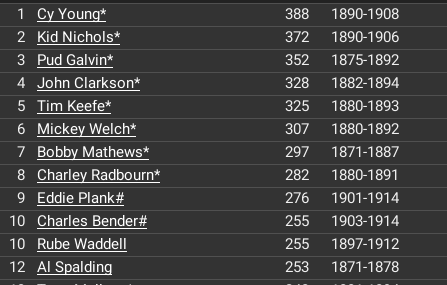
|
|
|
|
|
06-16-2023, 11:17 PM
|
#116 |
|
Major Leagues
Join Date: Apr 2019
Posts: 325
|
September 1914: LA Vaults to First
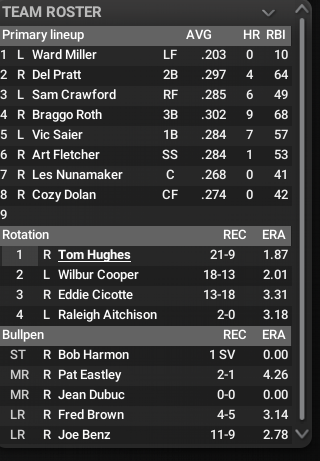
The Lobos have won 9 in a row and are now 3.5 games up and looking for their first pennant. They are definitely win Win Now mode having picked up Eddie Cicotte, Clyde Milan along with Sam Crawford back in the offseason. Are they good enough to do it? I believe so, they have the best run differential +144 in baseball. The Eastern League leaders, Boston, are just +44.
|
|
|
|
|
06-16-2023, 11:37 PM
|
#117 |
|
Major Leagues
Join Date: Apr 2019
Posts: 325
|
October 1914: It's NY and LA
It seemed like Boston had the Eastern League in hand but it winds up as a wild finish with four teams competing down the stretch. Philly may have actually been the best of the four, but they finish 4 games off the pace. It came down to a three game series between New York and Cambridge with the two teams tied on the final day. But New York wins it and they head to their second World Series despite really having any strong pitchers.
Los Angeles wins their first pennant and are the heavy favorites. 
|
|
|
|
|
06-17-2023, 11:14 PM
|
#118 |
|
Major Leagues
Join Date: Apr 2019
Posts: 325
|
October 1914: New York in a Major Upset
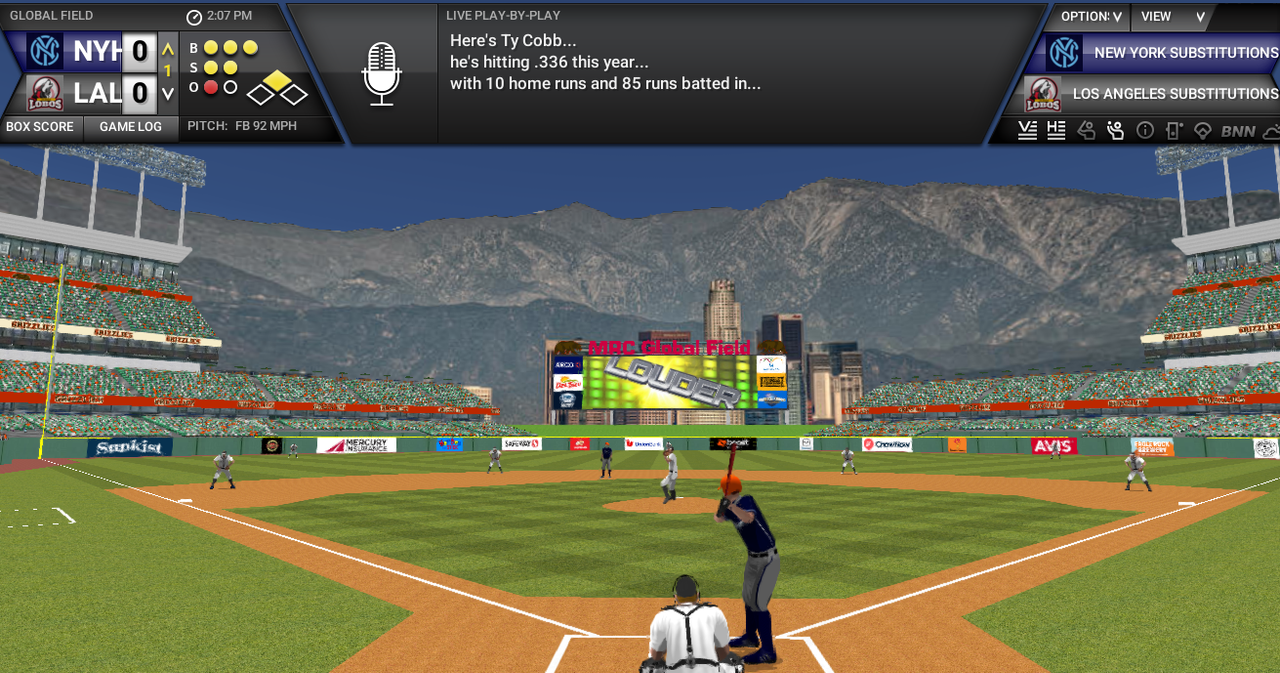
The New York Highrisers win a stunner beating what looked like a much better Los Angeles Lobos team. New York could sure hit with Ty Cobb (.522 in the series, MVP) and Joe Jackson but they ran out three also-ran pitchers, two of whom never made the MLB. Nevertheless, it was New York in 6. During the year, LA was 103-59 with a +204 RD while NY was just 89-73 and won a 4 team dogfight with a +35 RD. But that's why you play the games.
|
|
|
|
|
06-17-2023, 11:48 PM
|
#119 |
|
Major Leagues
Join Date: Apr 2019
Posts: 325
|
April 1915: The Rivalry
The rivalry between the two stars of the World Champion New York Highrisers continues. Ty Cobb far outhit Joe Jackson in the World Series and took the Series MVP but after the season, Shoeless Joe took home the league MVP, his 5th at age 25. Cobb and Jackson now both have 5 each.
The MVP in the WL was a surprise pick. Tillie Shafer of Cincinnati led the league in WAR but his .294/4/62 line for a team down in the standings wasn't a traditional pick. I thought HR and RBI leader Braggo Roth for the pennant winning Lobos might take it. 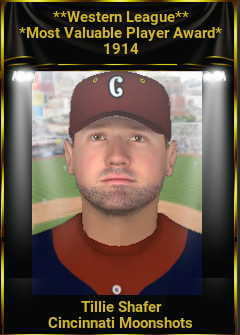 This is kind of a shame...from SABR: "Shafer was hassled from the moment he first entered the Giants’ clubhouse. He was a young, good-looking, shy guy from a wealthy family unaccustomed to hardened East Coast athletes. He didn’t drink, smoke, or chase women — the typical ballplayer activities of the time. Giants star outfielder Cy Seymour quickly bestowed the feminine nickname Tillie on Shafer. Throughout his tenure in New York, Shafer was branded as a momma’s boy and razzed by his teammates accordingly. Shafer was very sensitive to the barbs, continually complaining and whining about quitting the team.: |
|
|
|
|
06-18-2023, 12:04 AM
|
#120 |
|
Major Leagues
Join Date: Apr 2019
Posts: 325
|
May 1915: Honus and Nap
Honus Wagner and Nap Lajoie both retired after the 1914 season. Ironically both nearly won their first World Series in their final seasons in the league but neither could quite get there. Lajoie was 0-4, Wagner 0-2.
Lajoie: 8 All-Star teams, 3193 hits, 4 Gold Gloves, MVP in '01 and '04 Wagner: 10 All-Star teams, 3056 hits, 1 Gold Glove, MVP in '02, '04 and '06. 
|
|
|
|
 |
| Bookmarks |
|
|


