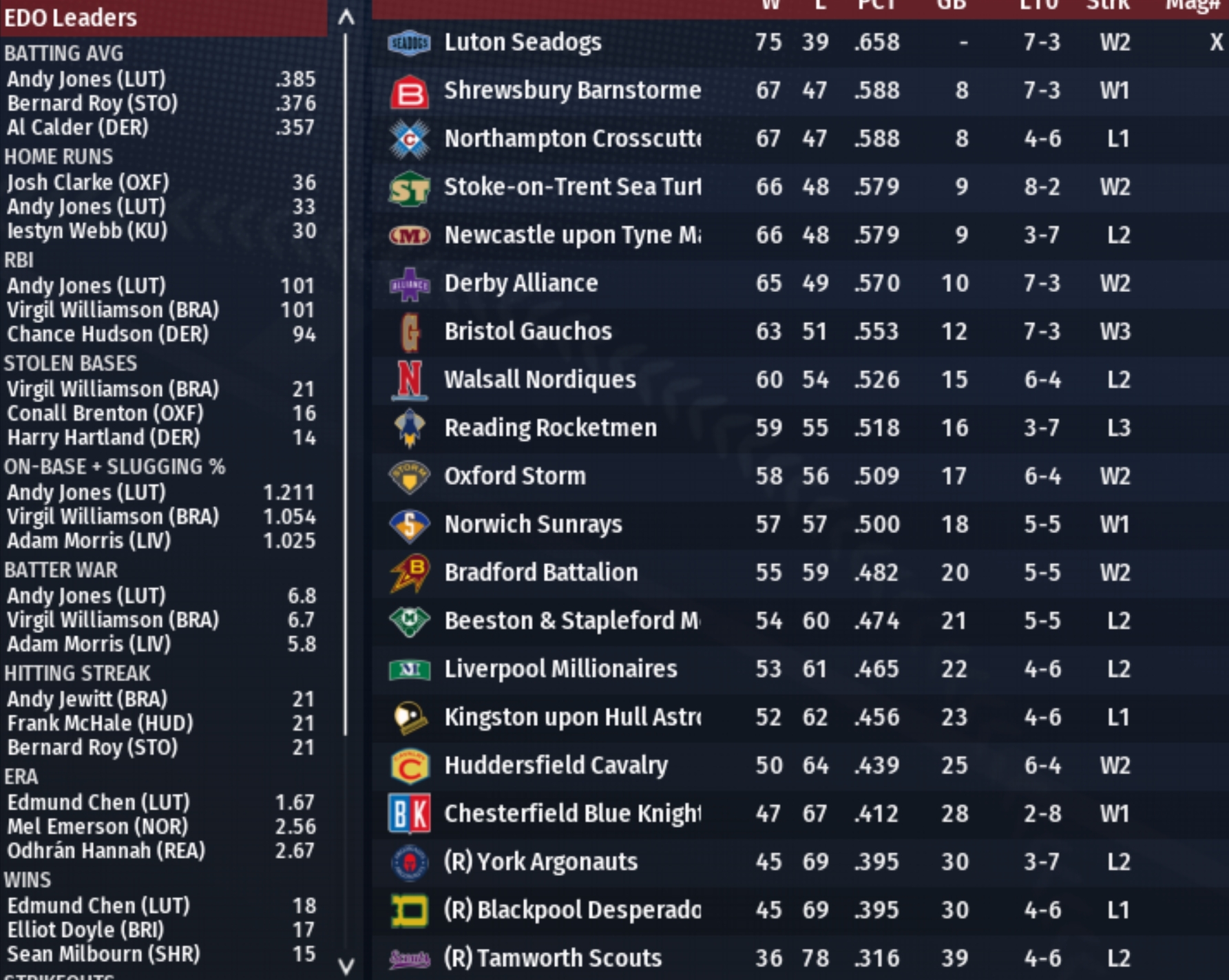
What made the 1950 season of the English Baseball League so special? First of all, the home run record--set in 1947 by Liverpool's Perry Tucker--was absolutely smashed open after having been tied the previous year at 29. This year, three players hit over 30, with leader Josh Clarke of Oxford hitting 9 a month for a total of 36.
The home-run craze was already expected, though, as players got beefier and power and pop overtook small-ball acumen. The story of the year was the incredible Luton Seadogs, who became just the second team to win Division One after being promoted that same year. The first one, Bradford in 1926, came in just the fifth year of the system's existence--Luton had been playing under Division Two finances and rules for the past five years. Their win was rarely contested--throughout all four months of the season, they stayed upwards of three games ahead of their opponents. And impressively, Luton's trophy was, unlike Bradford, not even their second consecutive one. They had been promoted as the third-place team, behind Norwich and Chesterfield, who finished 11th and 17th.
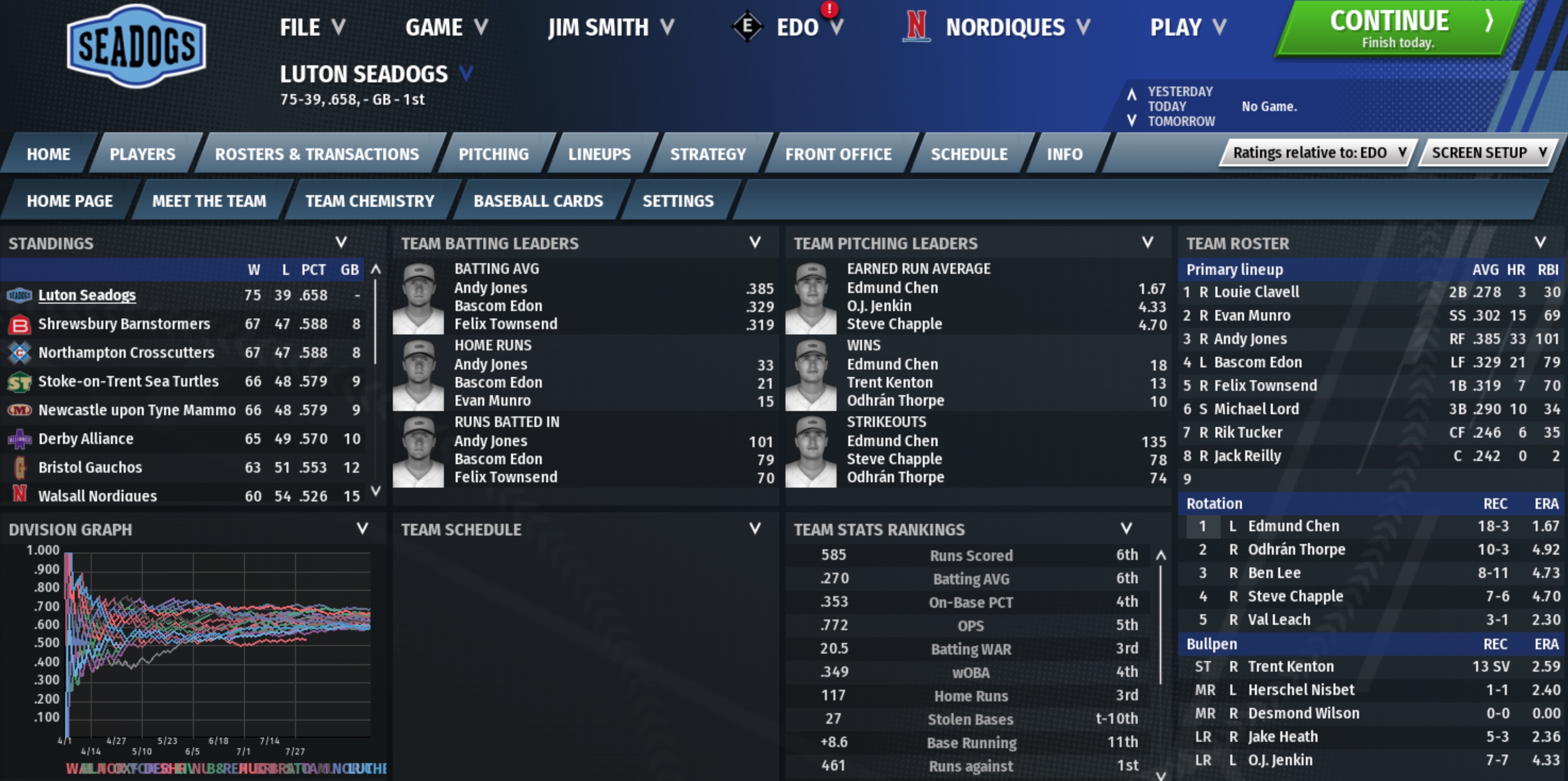
While every team member worked hard for their run, Luton's rise was due in large part to two incredible performances from previously primary players who nobody would have mistaken for superstars until now. Their best hitter, right-fielder Andy Jones, was one of the three players to hit over 30 home runs, topping out at 33. While he didn't nab the home-run crown, he led the league in RBIs and every slash category. It was an unexpected performance from a solid batsman who ranked third or fourth compared to Luton's offense in previous seasons. Jones, a fairly slight, well-liked 25-year-old from the village of Weston Turville, wasn't prepared in the least for his surge--he was earning a few thousand dollars a year for Luton, and was unlikely to get a pay raise until 1953, when his contract expired. For now, he could look forward to radio interviews and delivering Luton a postseason victory.
The other star was expected to play well upon his introduction to the top flight, but nobody expected him to secure possibly the best pitching season in EDO history. 26-year-old Edmund Chen, in the conversation for Luton's ace before this year but missing the latter half of their 1949 campaign with an oblique strain, proved himself incredibly capable, leading the league in wins (18) and ERA (1.67). His shutouts total, 7, was the most in the league since the record of 9, set in 1944 by Albert Patterson. Boasting a killer changeup, the affable "Chenny" is still in his arbitration period, expected to earn nearly $15k next year and hoping to bring Luton one or two more respectable finishes before a big payday.
Prior to their promotion, Seadogs enjoyed a nearly-unbroken initial top flight spell from 1922-1937, with a small blip of immediate relegation and then promotion in '28-'29. They were never favorites in an often crowded field, though, and their best placement was fifth in 1932, led by smart-hitting shortstop Alfie Stockdale and EDO all-time hits leader Lefty Rippin (true to his name, a lefty who ripped, though he was never a prominent power hitter in the bleary 20s and 30s). Their last year before this season at the top of the power rankings was a generation ago in '33. After a brief period of obscurity, Luton was promoted again in 1943 and finished a respectable 6th, before dwindling and being relegated in 1945. Notably, both Jones and Chen had no top-flight experience--they debuted for Luton in 1946.
Luton overall has a young, spry team that knows how to hit and pitch among the best. The dominant question, however, is whether they can hold together their core and not regress--as high-finishing promoted teams are known to do--in 1951. Their staff, GM John Robertson and manager Vernon Stuckey in particular, are young and recent arrivals to the league, with little experience running a team in peril. The annual postseason tournament, documented since 1943, will show a preview of how Luton might further their chances.
Elsewhere in the top flight, Tamworth flailed in their sophomore season and finished 36-78, clear below every other team. They accomplished this despite gaining the previous title-winning manager, the ex-Shrewsbury Julian Durham, who will likely face accusations of fraud from bitter fans unless he turns it around quickly in the next few years. Also relegated were legacy teams York and Blackpool, both former title winners (1944 and 1943) whose continuous top-flight terms went back 17 and 23 years. Blackpool now faces their first ever relegation, but it's hard to feel bad for the current iteration of these teams. Both are roiled in feuds among their everyday players and played clear worse of most winning teams this season.
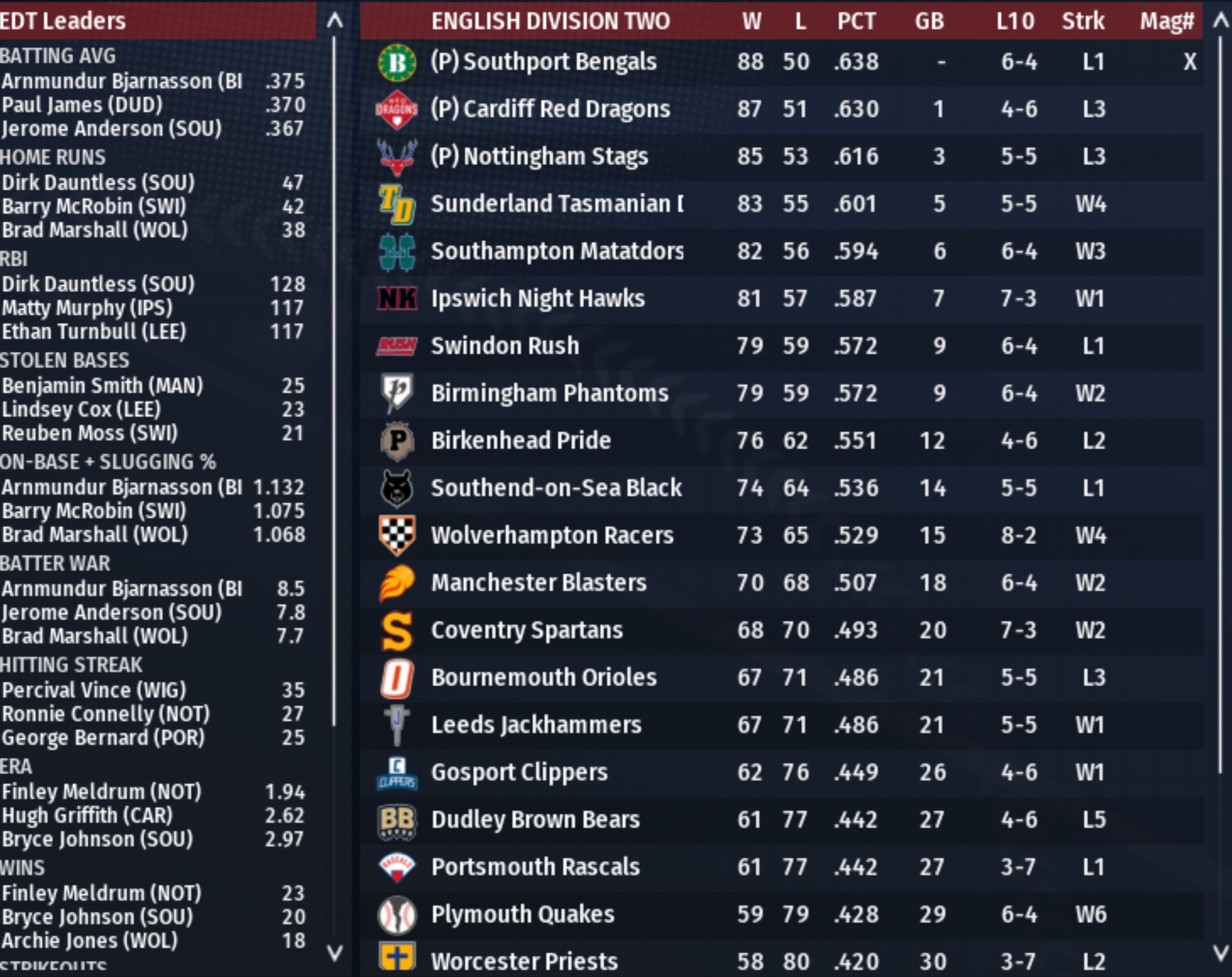
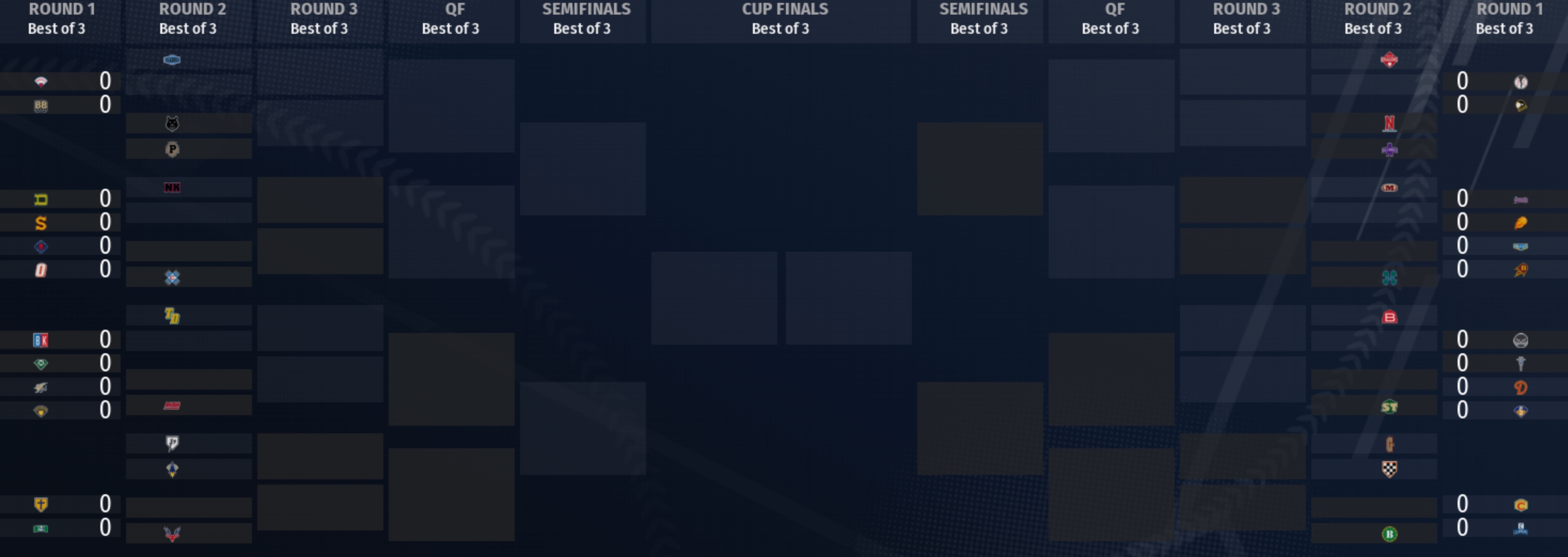
For the 1951 season, they will be replaced by teams including Southport, a regular mid-table Div 1 team until 1933, then an up-and-down side until 1939, their last sniff at the premiership. Bengals convincingly earned a promotion spot this year thanks to ace Bryce Johnson and the leadership of longtime Northampton first baseman Sebastian Limbrick, now in his fourteenth year and 35. Cardiff, the league's only Welsh team and long restricted by the rules of 4 foreigners (in this case, Englishmen) to a team, gets their fourth chance since 1940 to prove they can contend with major teams, a test they have failed every promotion. In third place is Nottingham, a team who won the EDO title in 1941 but were relegated in 1944 and have been aching for a return to victory ever since. Fans will get a look at their teams, and how they match up to the top flight, in the annual tournament, kicking off on Aug. 30.