It’s 1988, and I’m sitting in my home office at my house in Downingtown, PA, when the phone rings. On the other end it’s William(Bill) Wilson, CEO of Lukens Steel Company in Coatesville. Randy, it’s Bill Wilson from Lukens Steel, we met at the Reading Phillies game. Oh yes, hi Bill, how are things going. “They’re going great, and even better if you’ll say yes to my proposal. Do you have a minute? Ah, sure……
Before I finish this story, I should tell you how it came to be. After graduating from Shippensburg State College(now Shippensburg Univ) in 1977, I worked part time at the Reading Phillies.


Having a communications degree, I guess they felt I was qualified to “work” the fans between innings with free give aways, contests, games, etc. But that was only my “night job” when the team played. My “day job” was to “shadow” the GM and do whatever was necessary to help make his day a bit easier. The Reading Phils are now the AA affiliate of the Philadelphia Phillies, and have a long history, dating back to 1858 when they were known as the Reading Athletic Club. The actual “official” date of the now Reading Phillies, was in 1967. The job was mostly fun, sometimes demanding, but for me, I got to meet some awesome players like Larry Bowa, Greg “the Bull” Luzinski, Mike Schmidt, and Bob Boone, just to name a few. I learned all the “ins and outs” of what it took to run a ballclub, and several years later, when our GM took a two month hiatus for health reasons, myself, along with the owner, ran the day to day operations. That obviously caught the eye of not only the owner, but some of his “high class” friends. I also paid close attention to the “scouts” and what they would see in certain ballplayers. I learned some of the basic rules which include:
Some organizations use the 20/80 scale others use 2 to 8.They are the same thing.
2 or 20 is the low end of the scale and 8 or 80 is the high end.
Scouts typically use two numbers when grading, such as 4/6 or 3/5.
The first number is the player's current rating on the 2 to 8 scale the
second is his "projected" future professional baseball rating. Of course
those numbers are based on the individual scout's opinion.
When only one number is given, such as a 7, it is usually (almost
always) that scout's projection opinion of that player's professional
baseball potential.
Arm Strength - When scouts are evaluating a players arm strength it is usually during pre-game infield-outfield practice. A scout will get to see several throws by the outfielders to second, third, and home plate. If a player has a good arm, chances are he will show it here, particularly on throws to home plate. Scouts are looking for four things from outfielders: a strong overhand throw, a straight-line trajectory, good carry, and good life on the turf when the ball finally hits the ground. A strong arm is also necessary for infielders particularly the shortstop and third baseman. Scouts will pay the most attention to throws made from the outfield grass from deep short.
There are many other scouting “notes” I have, too many to mention here, but you get the picture. I was like a sponge, soaking up as much info as I could. This relationship with Reading went on until 1986, less, as time went on as I actually took a “real” job at a Fortune 500 company. And then in September of 1988, that phone call came, which would change my life forever.
Bill Wilson is a huge baseball fan, and in 1988, he ran Lukens Steel Company, a place that I actually worked the summer before college in 1973, and where my father worked for some 46 years. It has a storied history, and was named afer Rebecca Lukens, who Fortune magazine called "America's first female CEO of an industrial company". It was later taken over by the Huston family. But one thing these families had in common, along with Bill Wilson, and besides making Lukens Steel a very successful company, was there total love for baseball.
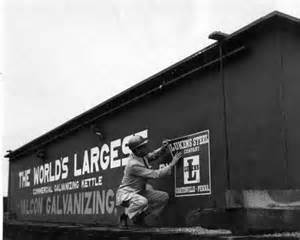
For the last couple of years, I had heard rumblings about a new, professional, independent league starting up. I chalked it up to just talk, and not much else, until this call came. Long story short, Bill Wilson and 23 other “investors” are starting a league called the Northeast Baseball Association. The league will be made up of 24 teams, all based in either Pennsylvania, or New York. There will also be a minor league system consisting of three leagues, somewhat mirroring that other league, Major League Baseball. Everything is in place, and many of the towns that the clubs will reside in, had ball clubs back in the day. The teams will mirror teams that were popular as far back as the early 1900’s , in leagues such as the Pennsylvania league, that ran in 1902 and 1903, and included Coatesville, and the
Blue Ridge League, which started in 1915, and included the Chambersburg Maroons, and the Hanover Raiders, two teams that would be in this league. I listened intently to his “pitch”, and while continuing to be a bit skeptical, I couldn’t help but get excited. So, when he offered me the GM position for the Coatesville Ball Club(no name yet), it was hard to hold back my enthusiasm. But I told him to give me the weekend, and I would call him Monday morning with an answer.
I immediately went to the library and did some research on some of the teams he mentioned, and realized that the owners of the various teams, had more than making money on their minds when they started this league. Most, truly had a love for the game, and it’s unique history. Further below is the intial “layout” of the league, as not more than an hour after our phone call, a courier dropped off a large package, which detailed the specifics of the league. Besides Lukens Steel, Mr. Wilson had some other “local” sponsors lined up, including A. Duie Pyle trucking, AT&T, the official “long distance carrier” of the Coatesville team, and some other, smaller sponsors. We would play our games at Ash Park, which sits across from the Gordon Middle School. I witnessed many a ballplayer hit bombs over that left field fence, and would see the ball land in the public swimming pool. There was no swimming allowed when games were on, which made parents breathe a lot easier. The field, not really a stadium at all, was getting a major overhaul, and by Spring of 1989, would be ready for professional baseball. Initial seating, would be about 10,000, with the opportunity to expand. Mr. Wilson needed a GM that would not only sign the best players, but could do it with keeping costs in mind. I have been know for being “the frugal one”, in whatever I do, Ok, some people call me cheap, but I totally understood, and quite frankly liked the challenge that this brought to the table. Unlike the clubs in the MLB league, that spent anywhere from 8 million(Atlanta Braves), upwards to 16 million(Boston), I thought it would be an exciting challenge to field a team with a limited budget, and see how successful we could be.
1922
Class D, Blue Ridge League
Blue Ridge League - Features
President: James Vincent Jamison, Jr.
Standings W L .Pct GB Manager
Martinsburg-WV Blue Sox 58 41 .586 - Burton Shipley / Dave Black (interim)
Waynesboro-PA Villagers 56 42 .571 1 ½ William “Country” Morris
Frederick-MD Hustlers 54 44 .551 3 ½ George W. “Buck” Ramsey
Hanover-PA Raiders 47 49 .490 9 ½ Bert Weeden
Chambersburg-PA Maroons 46 49 .484 10 Mike Mowrey
Hagerstown-MD Terriers 31 66 . 320 26 Mickey Corcoran/D. Lee Staley
1922 Blue Ridge League Leaders
Batting
Batting: .371, George “Reggie” Rawlings, Martinsburg At Bats: 394, Reggie Rawlings, Martinsburg
Runs: 82, Reggie Rawlings, Martinsburg
Hits: 146, Reggie Rawlings, Martinsburg Singles: 97, Reggie Rawlings, Martinsburg
Doubles: 26, Mike Mowrey, Chambersburg Triples: 9, Bill Satterlee, Chambersburg
26, Luke Kaunas, Waynesboro
Home Runs: 30, Lewis Robert Wilson, Martinsburg *Runs Batted In: 108, Reggie Rawlings, Martinsburg

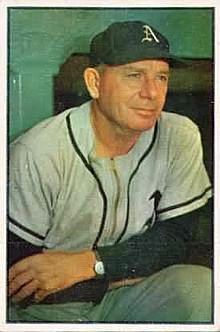
James Joseph Dykes was born in a hotbed of baseball, Philadelphia, on November 10, 1896. Not a large man for the day, standing 5-foot-9 and weighing 185 pounds at most, he developed strong wrists from working as a pipefitter, and as a caddie at Merion Cricket Club. Gravitating toward the sandlots as did so many other Philadelphia-area boys of the era,
Dykes signed to play second base for the Gettysburg team in the Class D Blue Ridge League. The Gettysburg club lost money that year, allegedly not meeting payroll for two months. Dykes contended later that some of the better players on his team traveled to other league clubs to play under an alias for a game or two, just to earn a few extra dollars on the spot. Such a practice ended quickly when opposing managers recognized such players.
It was there at Gettysburg that Connie Mack of the Philadelphia Athletics spotted him, and Jimmy signed with the American League entry of his hometown. Dykes made his big league debut May 6, 1918, after A's regular second baseman Maury Shannon was drafted into the Army for World War I. Playing in 76 games in the 1918 and 1919 seasons, Dykes demonstrated the proverbial "good field-no hit" stereotype, compensating for his inability to hit even .200 against wartime pitching with his graceful fielding around second base. His lack of hitting could be attributed to the fact that he was promoted from a Class D league straight to the majors, and really needed more seasoning. Also, Dykes did a tour of duty with the Army after the 1918 season and was not in shape when the next season rolled around.